Civic Engagement Awards
AASCU’s American Democracy Project recognizes individual leadership at the provost, faculty, and staff levels in civic engagement on AASCU member campuses.
Questions?It is our honor to shine a light on the great work being done on AASCU ADP campuses.
Our work to equip students with the knowledge, skills, and experiences to be informed and engaged, ready to tackle current and future issues to ensure a thriving democracy is more important than ever. The American Democracy Project recognizes leadership in civic engagement on AASCU member campuses through four individual awards and one institutional award.
Please note that the American Democracy Awards are paused for the 2026 cycle.
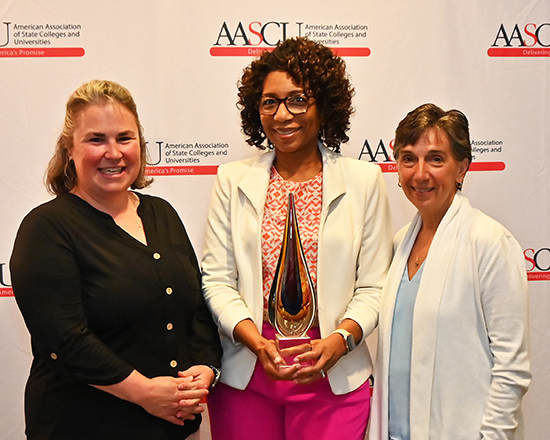
Honoring Individuals
William M. Plater Award
in recognition of exemplary leadership by a chief academic officer.
Learn more.Honoring Institutions
We the People Award
One of AASCU’s Excellence & Innovation Awards, given to recognize institutional team commitment to meaningful and deep civic engagement work.
Please note that the We the People Award is on hiatus in 2025.
Learn more.Awards News
The Barbara Burch Award for Faculty Leadership in Civic Engagement
Given in recognition of exemplary faculty leadership in advancing the civic learning and engagement of undergraduate students.
2025 Award Winner

Leah Murray
Director, the Olene S. Walker Institute of Politics & Public Service and Brady Presidential Distinguished Professor of Political Science
Weber State University (UT)
- Nominees must be a faculty member (tenure track or contingent) with more than five years of teaching experience on an AASCU campus who demonstrates leadership in advancing the civic learning and engagement of undergraduate students.
- Nominations must include an endorsement from campus leadership, the nominee’s curriculum vita, and additional documents that provide examples of the nominee’s sustained leadership in advancing civic learning and ensuring students have equal opportunities for success.
- Presentation at the American Democracy Project Summit in July.
- Recipients will receive a commemorative to acknowledge the national recognition.
- 2025: Leah Murray, Weber State University (UT)
- 2024: Allison Rank, State University of New York at Oswego
- 2023: Mary Evins, Middle Tennessee State University (MTSU)
- 2022: Sandy Pope, Salisbury University (MD)
- 2021: Judithanne Scourfield McLauchlan, University of South Florida, St. Petersburg
- 2019: Elizabeth Bennion, Indiana University South Bend
- 2018: Lance Lippert, Illinois State University
- 2017: Shala A. Mills, Chair and Professor of Political Science, Fort Hays State University (KS)
- 2016: Elizabeth Bennion, Professor of Political Science and ADP Campus Director, Indiana University South Bend
- 2016: Molly Kerby, Associate Professor of Diversity and Community Studies, Western Kentucky University
- 2015: Patrick Dolenc, Professor of Economics, Keene State University (NH)
- 2014: Gregg Kaufman, Instructor and ADP Campus Coordinator, Georgia College
About the award
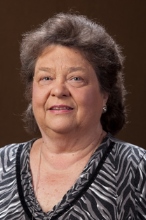
This award was established in 2014 to honor Barbara Burch, Provost Emerita at Western Kentucky University.
During her time as provost, Barbara Burch strongly supported faculty in the development of civic programming at Western Kentucky University. She actively sought out talented faculty members to offer positions of leadership and program development. She provided substantial financial support for professional development. She offered the prestige of her office and her own personal commitment to support faculty interested in civic work. Her efforts resulted in the development of a strong cadre of faculty at Western Kentucky University who are deeply committed to civic engagement and civic outcomes. As a result of her support for faculty, Western Kentucky University was seen as one of the leading universities in the country in civic engagement.
The William M. Plater Award for Leadership in Civic Engagement
Given in recognition of exemplary leadership of an AASCU chief academic officer in advancing the civic learning of undergraduates.
2025 Award Winner
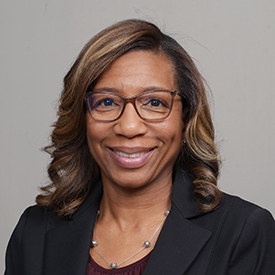
Dimetri Horner
Provost and Vice President of Academic Affairs
Harris-Stowe State University (MO)
- Nominees must be a chief academic officer or provost at an AASCU member campus
- Nominations should demonstrate how the individual has advanced democratic engagement and influenced the civic learning of undergraduates through programs and activities that encourage greater knowledge, skills, experiences, and reflection about the role of citizens in a democracy.
- Nominations must include an endorsement from the nominee’s president/chancellor, the nominee’s curriculum vita, and additional documents that provide examples of the nominee’s sustained leadership in advancing civic learning and ensuring students have equal opportunities for success.
- Presentation at the American Democracy Project Summit in July. At the awardee’s discretion, the award can also be presented at a suitable occasion on the recipient’s campus, ordinarily in the fall semester following selection.
- Recipients will receive a commemorative to acknowledge the national recognition
- 2025: Dimetri Horner, Harris-Stowe State University (MO)
- 2023: Peg Gray-Vickrey, Texas A&M University-Central Texas
- 2022: Kathy Johnson, Indiana University-Purdue University at Indianapolis
- 2021: Mark Canada, Indiana University Kokomo
- 2019: Richard Eglsaer, Sam Houston State University (Texas)
- 2018: Vicki Golich, Metropolitan State University of Denver, Colorado
- 2017: Philip Rous, Provost and Senior Vice Chancellor for Academic Affairs, University of Maryland, Baltimore County (UMBC)
- 2016: Joan Lorden, Provost and Vice Chancellor for Academic Affairs, University of North Carolina Charlotte
- 2015: Michael Vaughan, Provost and Vice President for Academic Affairs, Weber State University (Utah)
- 2014: Harold Hellenbrand, Provost and Vice President for Academic Affairs, California State University, Northridge
- 2013: William A. Covino, Provost, California State University Fresno
- 2012: Emile “Mel” Netzhammer, Provost, Keene State College (N.H.)
- 2011: Vincent Magnuson, Vice Chancellor for Academic Administration, University of Minnesota, Duluth
- 2010: Gail Wells, Provost and Vice President for Academic Affairs, Northern Kentucky University
- 2009: David L. Carr, Provost and Executive Vice President, Richard Stockton College of New Jersey
- 2008: Lawrence V. Gould, Provost and Chief Academic Officer, Fort Hays State University (Kan.)
- 2007: Barbara G. Burch, Provost and Vice President for Academic Affairs, Western Kentucky University
- 2006: William M. Plater, Executive Vice Chancellor and Dean of the Faculties, Indiana University Purdue University Indianapolis
About the award
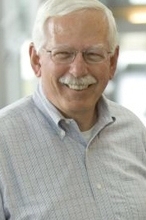
This award was established in 2006 to honor William M. Plater, Chief Academic Officer of IUPUI from 1987-2006.
During his term, Bill Plater oversaw the development of civic engagement as an integral part of the campus mission and as a defining characteristic of its graduates, thus helping Indiana University Purdue University Indianapolis (IUPUI) win recognition among peers as a national leader. Through his writing, speaking and public advocacy, Plater also helped extend universities’ understanding of their collective responsibility as “Stewards of Place,” while connecting them with the larger regional, national and global communities of which they are also a part.
The John Saltmarsh Award for Emerging Leaders in Civic Engagement
Awarded to exemplary early-career leaders who advance the wider civic engagement movement in higher education via community-campus collaboration to build a broader public culture of democracy committed to equal opportunity for all.
2024 Award Winner
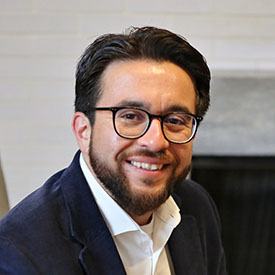
Jonathan Gomez
Assistant Professor, Department of Chicana and Chicano Studies
San Jose State University (CA)
- Be faculty or staff members at an AASCU institution.
- Demonstrate their community partnership work is grounded in reciprocity, mutual respect, shared authority, and co-creation of goals and outcomes.
- Exhibit contributions to sustain and advance the civic engagement movement in the areas of practice, institutionalization, and scholarship.
- Nominees must be an emerging higher education leader whose community partnership work is grounded in reciprocity, mutual respect, shared authority, and co-creation of goals and outcomes on an AASCU campus.
- Nominations must include an endorsement from campus leadership, the nominee’s curriculum vita, and additional documents that provide examples of the nominee’s contributions in the areas of practice, institutionalization, and scholarship.
- Presentation at the American Democracy Project Summit in July.
- Recipients will receive a commemorative to acknowledge the national recognition.
- 2024: Johnathan Gomez, San Jose State University
- 2023: Lesley Graybeal, University of Central Arkansas
- 2022: Bekah Selby, Emporia State University (KS)
- 2021: Margot Morgan, Indiana University Southeast
- 2019: Allison Rank, State University of New York at Oswego
- 2018: Nicholas Hartlep, Metropolitan State University in Minnesota
- 2017: Danielle Lake, Assistant Professor of Liberal Studies, Grand Valley State University (MI)
- 2016: Jennifer Purcell, Assistant Professor of Leadership Studies, Kennesaw State University (GA)
- 2015: Adam Bush, Chief Academic Officer, College Unbound
- 2015: Lane Graves Perry, Director of Service Learning, Western Carolina University (NC)
- 2014: Bethany Fleck, Assistant Professor of Psychology, Metropolitan State University of Denver (CO)
- 2013: Brandon Kliewer, Assistant Professor of Civic Engagement and ADP Campus Director, Florida Gulf Coast University
- 2012: Emily Janke, Special Assistant for Community Engagement, University of North Carolina at Greensboro
- 2012: Paul Markham, Assistant Professor and Co-Director at the Institute for Citizenship and Social Responsibility, Western Kentucky University
- 2011: Cecilia M. Orphan, National Manager, American Democracy Project
About the award
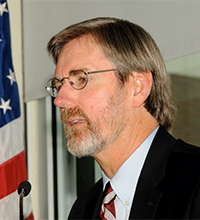
This award was established in 2011 to honor John Saltmarsh, Professor of Higher Education at the University of Massachusetts, Boston.
John Saltmarsh is Professor of Higher Education in the Department of Leadership in Education in the College of Education and Human Development at the University of Massachusetts, Boston. He has published widely on community engaged teaching, learning and research, and organizational change in higher education, including the co-edited book Publicly Engaged Scholars: Next Generation Engagement and the Future of Higher Education (2016), and the edited volume with Matthew Hartley, ‘To Serve a Larger Purpose:’ Engagement for Democracy and the Transformation of Higher Education (2011). He is the co-author of the “Democratic Engagement White Paper” (NERCHE, 2009) and “Full Participation” (Columbia University Law School: Center for Institutional and Social Change, 2011). From 2005-2016 he served as the Director of the New England Resource Center for Higher Education (NERCHE). From 1998-2005 he was the director of the national program on Integrating Service with Academic Study at Campus Compact.
The award was named in John Saltmarsh’s honor to recognize a long-standing passion of his: nurturing and preparing the next generation of higher education leaders (staff, faculty, or administrators) to sustain and advance the civic engagement movement. The award recognizes emerging higher education leaders whose community partnership work is grounded in reciprocity, mutual respect, shared authority, and co-creation of goals and outcomes.
The Spirit of Democracy Award
Established in 2022, this award is given in recognition of exemplary leadership from staff (non-faculty, non-senior administrator) in advancing the civic learning and engagement of undergraduate students.
2025 Award Winner

Kimberly Schmidl-Gagne
Officer of Assessment & Accreditation
Keene State College (NH)
- Nominees must be a staff member (defined as non-faculty, non-senior administrator), affiliated for more than five years on an AASCU campus, who demonstrates leadership in advancing the civic learning and engagement of undergraduate students.
- Nominations must include an endorsement from campus leadership, the nominee’s curriculum vita, and additional documents that provide examples of the nominee’s sustained leadership in advancing civic learning and ensuring students have equal opportunities for success.
- Presentation at the American Democracy Project Summit in July.
- Recipients will receive a commemorative to acknowledge the national recognition.
- 2025: Kimberly Schmidl-Gagne, Keene State College (NH)
- 2024: Sara Heim, Salisbury University (MD)
- 2023: Sandy Jacobs, University of North Carolina at Pembroke
- 2022: Romy Hübler, University of Maryland, Baltimore County
Questions about the Civic Engagement Awards? Let us know.
"*" indicates required fields
