Emerging Leaders Program
ELP is designed for academic and administrative professionals to gain a greater appreciation of the Academy and build the skillset and mindset to lead campus initiatives and advance to more senior leadership roles. Participants graduate with skills, connections, and support necessary to navigate the transition to higher administrative roles.
Get notified.
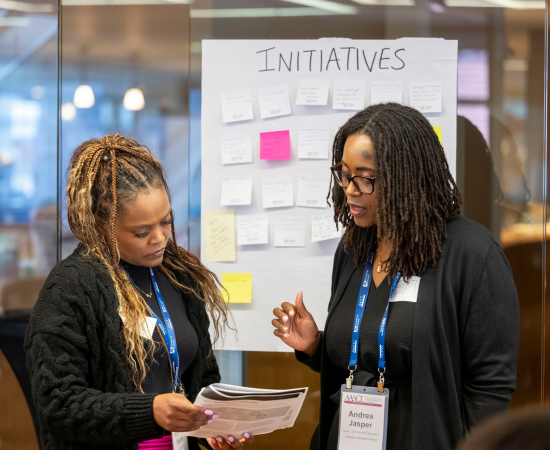
ELP is designed to prepare the next generation of higher education leaders to be effective, compassionate, resilient, accountable and courageous to help all students reach their goals.
ELP provides the opportunity for participants to assess their individual leadership style and strengths; develop or enhance a leadership philosophy and to apply the skills learned in the instructional portion of the program to a project/initiative on their home campus over the course of the academic year.

Who Should Participate
- Mid to senior level academic and administrative professionals serving at regional public universities who are exploring opportunities to advance to higher-level administrative positions.
How You’ll Benefit
- Develop a systems-level view of how academic institutions function—from governance and finance to student affairs and faculty development—helping to influence institutional priorities and navigate complex organizational dynamics
- Build the capacity to lead change initiatives with clarity, empathy, and resilience
- Gain a trusted circle of colleagues who understand your challenges and can offer insight, encouragement, and collaboration
- Showcase your leadership in action through a campus project—from vision-setting to execution and reflection
What to Expect
- Discussions of the evolving leadership competencies needed to lead in today’s complex and turbulent times
- Tailored to the distinctive needs of mid-career academic or administrative professionals exploring leadership roles at regional public universities
- Opportunity for real-time application and impact of tools and trainings via a campus project
- Strong relational component—commitment to create and support trust, encourage peer-to-peer learning, confidentiality, and safety among the cohort
- Gain a comprehensive understanding of the various aspects of the academe and how they relate to each other
- Learn and apply the fundamentals of project management
- Develop critical skills for leading transformational institutional change
- Strengthen communication skills
- Enhance management and leadership skills; specifically leading up, down and sideways
- Build a strong and supportive network of peers and mentors
- Demonstrate leadership skills by leading an on-campus project or initiative
- University governance, structure and systems to support students
- Budgeting, finance and administration
- Effective communications
- Navigating and leading change
- Leadership case studies in crisis management
- Managing staff and faculty
- Navigating the search process
- National trends in higher education
- Regional Public Universities – our unique role
- Project management
Participants will lead a project or initiative at their home campuses over the course of the academic year, under the guidance of a designated advisor. The project will have an impact on the campus community and align with the participant’s professional goals. Examples of university projects include the following:
- Chairing or co-chairing a division, university-wide committee, or task force that requires working with multiple constituencies
- Managing a project for a division or university strategic initiative
- Conducting a research project that investigates a challenge the university faces and provides an opportunity for the participant to influence campus decision-makers using data
Programming will be a blended experience, with in-person and virtual programming. In-person programming will not be livestreamed or otherwise recorded. 100% attendance and participation is expected. Virtual programming will take place on select Wednesdays and Fridays between 3 and 5 p.m. ET (exact dates TBD).
- An intensive in-person program at AASCU’s Washington, D.C. office (June 23–25, 2026)
- Up to 12 interactive 60-to 120-minute interactive virtual sessions (August–December 2026)
- A project or initiative the participant leads on their home campus
- Applications that are complete, including a nomination/endorsement from a president/chancellor or cabinet-level administrator, and submitted by the deadline will be considered.
- ELP faculty review applications and select a cohort that reflects AASCU institutions across the country
- Preference is given to applicants from AASCU member institutions and regional public universities.
- A complete application for ELP includes the following:
- Nomination or endorsement from the president/chancellor or cabinet-level administrator from your home institution
- Clear and concise summary of your personal and professional development goals
- Description of your campus project and how it supports your professional goals
- Commitment to 100% participation
2026 Registration Fees
- Participants from AASCU member institutions: $2,500
- Participants from non-member institutions: $3,500
- The registration fee covers program administration, meals during the in-person intensive, and all materials. Participants are responsible for their own travel and accommodation in Washington, D.C.
- Upon acceptance to ELP, participants must register no later than April 10, 2026
Scholarships
- Limited scholarships are available to accepted applicants from AASCU member institutions.
Cancellation Fees
- Cancellations received before May 1 are eligible for a refund, minus a 25% administrative fee.
- Cancellation requests received on or after May 1, 2026 are NOT eligible for a refund.
- If you need to cancel after May 1, please email leadershipdevelopment@aascu.org to explore if you are eligible for a deferral to a different iteration of ELP or receive a credit toward a different program.
Meet the 2026 ELP faculty.
ELP has convened an impressive faculty of current and former presidents, chancellors, cabinet-level administrators, and national subject matter experts. The faculty roster may change in 2026.
Aiko
Bethea
Founder
RARE Coaching & Consulting

Mary C.
Brackett
Senior Director
University of Virginia

Kristin G.
Esterberg
Chancellor
University of Washington Bothell

Dan
Feely
Managing Partner
Transforming Solutions, Inc.

Renea P.
Morris
Interim Chief of Strategic Marketing
Excelsior University

Charles L.
Welch
President and CEO
AASCU
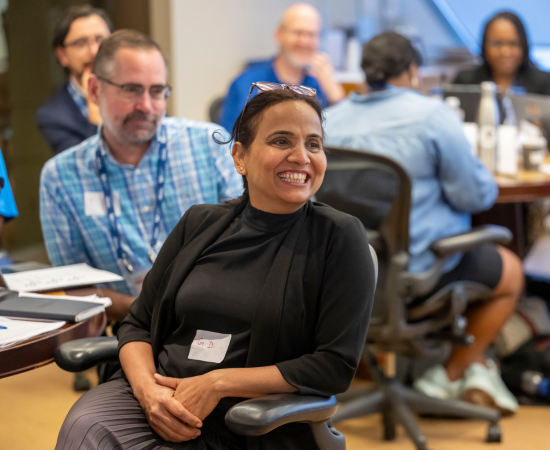
ELP connects, equips, and empowers the next generation of higher education leaders.
ELP has a high impact on the skillsets and mindsets of program participants and the curriculum effectively addresses top-of-mind issues for today’s emerging leaders at AASCU institutions.
The Numbers
93%
Percentage of 2023 cohort members who reported feeling connected to colleagues at peer institutions at the end of ELP.
4.63 out of 5
Average rating of content, presentation, and speaker quality for all 2023 ELP programming.
33%
Increase in feeling equipped with the knowledge and relationships needed to pursue career goals from the start to the end of the program (2023 cohort).
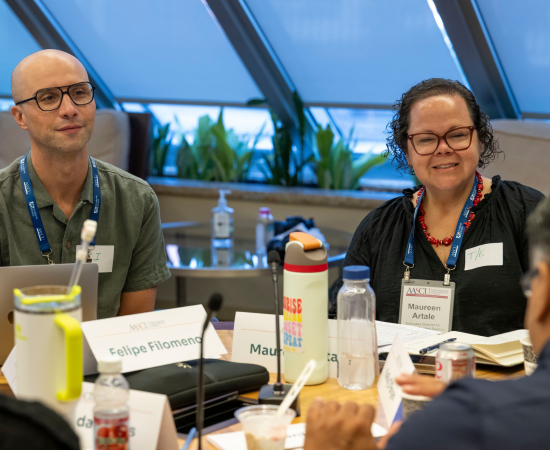
The Stories
“AASCU’s Emerging Leaders Program has been transformative in aligning my leadership aspirations with actionable goals. The program equipped me with essential skills to navigate university leadership roles, offering insights that directly resonate with my short-term goal of excelling in academic and administrative positions, and my long-term aspiration to advance in higher education leadership.”
“Due to my participation in the program, I am a more confident leader on-campus and in my community, and I have gained clarity on the path I wish to take as I progress in my career. Additionally, I gained a community of support that I can leverage for informal or formal academic, professional, and/or social support. I recommend this program to anyone working in higher education that have aspirations to ascend in leadership whether that be on the faculty or administrative side.”
“The Emerging Leaders Program exceeded my expectations with its exceptional organization, timely relevance to the evolving landscape of higher education and social climate, and unwavering commitment to intentionality. The program’s faculty provided pragmatic and supportive guidance, fostering a rich environment for personal and professional growth. Due to my participation in the program, I am a more confident leader on-campus and in my community, and I have gained clarity on the path I wish to take as I progress in my career.”
“The Emerging Leaders Program afforded me the opportunity to not only learn, but engage and network with leaders. This program is truly intentional with developing methods of success for future leaders. I thoroughly enjoyed and am grateful to be able to have this experience.”
Meet the 2026 Cohort

Derek G.
Abrams
Professor of Practice
University of Southern Mississippi

Morgan
Anderson
Assistant Dean
University of Wisconsin-Whitewater

Kathrine A.
Bailey
Director for Strategic Initiatives
Austin Peay State University (TN)

Brandon
Begarly
Assistant Vice President for Research Administration and Strategy
CUNY Lehman College

Kelly
Bennion
Associate Dean for Academic Personnel and Operations, College of Liberal Arts
California Polytechnic State University-San Luis Obispo

Sudarshana
Bordoloi
Director of Center for Excellence in Teaching and Learning and Professor of Geography
Minnesota State University-Mankato

Elizabeth
Boyd
Immediate Past Chair, Academic Senate of the California State University
California State University-Chico

Denise M.
Brenes
Director of Student Success
Northern Michigan University

Carmen R.
Carter
Dean, University College
Prairie View A & M University (TX)

Yaneth
Correa
Associate Dean
Colorado State University Pueblo
Cirilo
Cortez
Associate Vice President, Student Engagement and Retention Programs
California State University-Chico
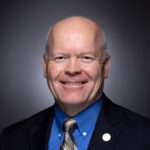
Christopher
Engen
Special Assistant to the Provost
University of Wisconsin–Stout Polytechnic

Jenna
Finley
Associate Vice President of Student Affairs
University of Northern Colorado

Amy
Gancarz-Kausch
Interim Associate Dean, SSE
California State University-Bakersfield

Aaron
Gibbs
Associate Dean, Student and Academic Services
Rutgers University-Newark (NJ)

Lindsey
Gilmore
Associate Vice President for Campus Engagement
Austin Peay State University (TN)

Melanie
Graham
Director of Strategic Initiatives
Old Dominion University (VA)

Darlene Ann
Groomes
Associate Dean, School of Education and Human Services
Oakland University (MI)

John
Hildreth
Associate Dean of Research / Distinguished Professor
Western Carolina University (NC)

Jonell
Hinsey
Associate Vice Provost for Student Success and Academic Support
Middle Tennessee State University

Naadiya
Hopkins
Assistant Vice Chancellor of Student Affairs-Student Engagement and Student Leadership
Fayetteville State University (NC)

Karen
Jackson
Interim Dean for Student Success, Assistant Professor of Education
Georgia Gwinnett College

Alison J.
Joseph
Chief Data and Analytics Officer
Western Carolina University (NC)

Janine R.
Knight
Case Manager for Student Care and Advocacy
Pennsylvania State University-Penn State Berks
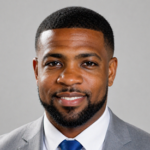
Brandon
Lee
Title IX & Equal Opportunity Officer
University of Houston-Downtown (TX)

Joanne
Leon
AVP for Campus & Community Engagement
Central Connecticut State University

Shanny
Luft
Associate Dean, University College
University of Wisconsin-Stevens Point

Lisa
Lynch
Executive Assistant/Project Manager Marketing & Communications
Delaware State University

Lezlee
Matthews
Director Co-Curricular Learning & Assessment
San Jose State University (CA)

Karen
May-Newman
Executive Director of STEM Teaching, Learning and Innovation
San Diego State University (CA)

Soh
Meacham
Associate Dean, Graduate Studies and Research & Professor and Coordinator, EdD Program
University of Northern Iowa

Joanna
Merritt
Director University Analytics
The University of Texas at Arlington

Jason S.
Ostrowski
Associate Vice President of Student Affairs and Engagement
SUNY Oneonta

Raymond A.
Poff
Professor/Coordinator, Recreation, Park & Nonprofit Administration; Director, McChesney Field Campus
Western Kentucky University

Steven
Radwanski
Assistant Vice President for Student Living and Learning/Executive Director of Residential Life
Stockton University (NJ)

Pronoy
Rai
Associate Professor and Academic Area Lead (Geography)
Portland State University (OR)

Andrew
Rechnitz
Assistant Vice Provost, Creative Technologies & Media Engagement
Texas State University

Ronald D.
Reeves
Associate AD Student-Athlete Leadership & Engagement
Oakland University (MI)

Kendall
Ross
Associate Vice Chancellor, Economic & Workforce Development
University of Arkansas-Fort Smith

Frederick
Smith
Senior Associate Vice President for Student Life and Community Inclusion
San Francisco State University (CA)

Abbie
Strunc
Interim Dean, College of Education
Sam Houston State University (TX)

M. Afzal
Upal
Associate Dean of the College of Integrated Science & Engineering
James Madison University (VA)

Justin
Vaughn
Professor, Department of Political Science; Director of the Center for Applied Civic Leadership
Coastal Carolina University (SC)

Darius
Watson
Assistant Provost for Academic Innovation, Outreach and Research; Dean of the College of Professional Studies
Lincoln University (MO)

Stephanie
Zadroga-Langlois
Director Continuing Education & Workforce Development
Northern Michigan University
Recent Program News
Our Thought Partners


Applications for the 2026 ELP applications are closed.
Application Details
Application Requirements
- Early- to mid-career academic and administrative emerging leaders who are exploring opportunities to advance to higher-level administrative positions
- Brief description of the campus project/initiative you will lead under the guidance of a designated mentor
- Endorsement from a president/chancellor or cabinet-level administrator from your home institution
Important Dates
- The 2026 program will take place from June 2026 to December 2026
- Applications and endorsements for 2026 are due February 9, 2026
Have questions about the Emerging Leaders Program? Let us know.
"*" indicates required fields
